
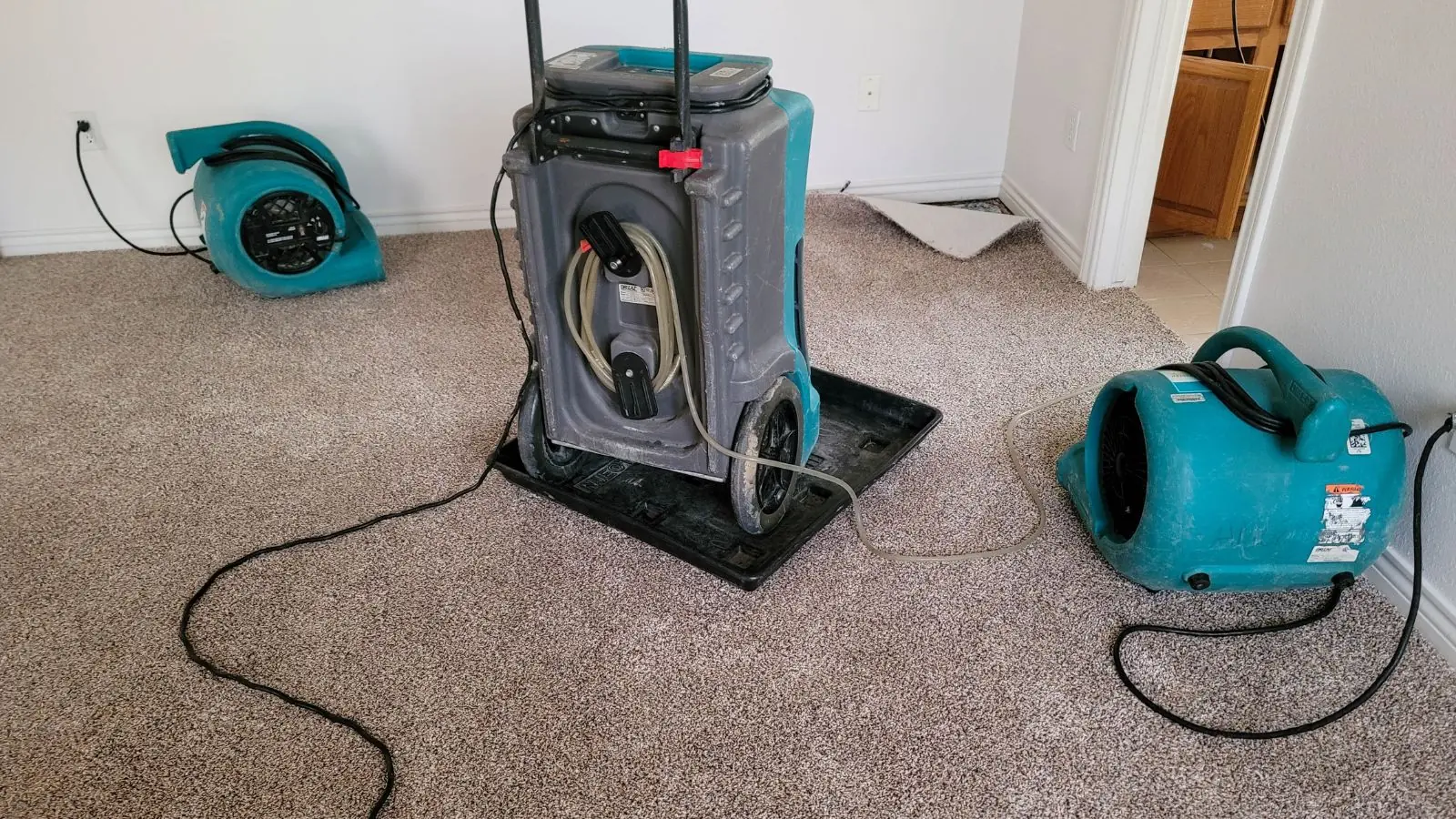
Water extraction removes liquid water, and drying removes the moisture left in materials and air. In a typical Tarzana loss, extraction comes first and drying runs for several days afterward. The ANSI/IICRC S500 standard describes this sequence, and a good crew shows you the readings that prove each stage is done.
This guide describes what the equipment does, how a crew plans a job and how to tell when drying is complete.
Extraction: getting the liquid water out
Extraction uses pumps for deep water and wand-style extraction units for carpet and hard floors. Truck-mounted units handle big volumes. The goal is to remove as much liquid as possible, since every gallon pulled out is a gallon that does not have to be evaporated later.
Carpet that was wet briefly may be lifted, the pad removed and the carpet dried in place. Pad is rarely saved, because it holds water and is cheap to replace.
Drying: what each piece of equipment does
Drying depends on moving air and removing moisture from it. Air movers push air across wet surfaces, which makes water evaporate. Dehumidifiers then remove that moisture from the air so it does not settle back into the building.
- Air movers speed evaporation from carpets, floors and walls.
- LGR dehumidifiers, short for low-grain refrigerant, pull moisture from the air even at low humidity.
- Desiccant dehumidifiers work well in cool or very damp conditions.
- Moisture meters and thermal cameras locate wet spots and confirm they are dry.
- Wall and floor drying systems pull moisture from cavities and under hard flooring where regular airflow cannot reach.
Water damage classes and what they mean for drying
ANSI/IICRC S500 classifies losses by how much water the materials absorbed, which shapes the equipment plan.
| Class | Description | Typical effect on the job |
|---|---|---|
| Class 1 | Least moisture absorbed, little wet material | Light equipment and short duration |
| Class 2 | Significant moisture in carpet and cushion, some wall | More equipment and longer drying |
| Class 3 | Water from above, saturating ceilings, walls and insulation | Heavy drying and some removal |
| Class 4 | Specialty materials such as hardwood, plaster or concrete | Specialty drying and longer timelines |
How a crew plans and monitors the job
A crew maps the damage with moisture meters, records readings by room, and places equipment based on the affected area. It returns daily to re-read the same points, adjust equipment and remove anything that is no longer needed.
The job ends when materials reach their dry standard. That is a reading, not a day count, and you can ask to see the log. Most jobs run several days, with the length depending on materials and depth of wetting.
Why Tarzana's weather changes the drying plan
Tarzana's rain is concentrated in winter, with the heaviest stretch from roughly January through March. Humid, cool days slow evaporation and make dehumidifiers work harder, while the dry air of a Valley summer speeds drying but can also bring higher electricity use when air conditioners run alongside the equipment.
Ask a crew how the plan adjusts for the season and for your home, including how many machines will run and for how many days. Equipment draws power, so tell your insurer about the electricity cost and keep your bill for the period. Homes in Woodland Hills and Reseda follow the same plan.
Questions to ask before you hire
Ask whether the crew's work follows ANSI/IICRC S500, how many air movers and dehumidifiers they plan to use, how often they will take readings and what dry standard they are working toward. Ask for the log at the end. A company that cannot explain its plan may not have one.
For the first 72 hours in detail, see water mitigation. If the water is still standing, start with emergency water removal.
The equipment, in plain words
Extraction removes liquid water from floors and low areas using pumps and wand extractors. After that, the focus shifts to moisture bound in materials, which is removed by air movement and dehumidification.
- Air movers push air across wet surfaces to speed evaporation.
- Dehumidifiers remove moisture from the air so more can leave materials.
- Moisture meters show how wet wood, drywall and concrete are.
- Thermal cameras help find cool, wet areas behind surfaces.
- Injectors or panels can dry wall cavities without removing every board.
How drying is monitored
A crew records readings on day one and returns to measure again as drying progresses. Equipment is moved as areas dry, and the work ends when readings match a dry reference point for that material.
Drying time depends on the materials, the amount of water and the weather. Rather than a set number of days, readings tell the story. A page that promises a fixed schedule before looking at the space is guessing.
Why the noise and heat are normal
Equipment runs around the clock and warms the room, which speeds evaporation. It is loud and uses electricity, and a crew should explain what to expect. Keeping doors closed helps because the dehumidifiers work best in a contained space.
For a clean-water leak, extraction and drying are the heart of water mitigation. When the water is larger in volume, emergency water removal covers the pumping phase.
Equipment, noise and what living with it is like
Drying equipment is loud, runs around the clock and warms the room. Plan for the noise, keep pets away from cords and let the crew know about medical or sleeping needs. If equipment is placed where you cannot live with it, ask whether it can be moved without hurting the drying.
Frequently asked questions
Many jobs run several days, depending on materials, depth and class. Daily readings decide when equipment can leave.
For a small, clean spill on a hard surface you may manage. For wet carpet pad, drywall or wood, a meter and professional-grade equipment are what make the difference, and a wrong guess can leave moisture inside the wall.
Yes, running machines use power. Ask for the equipment count and expected days, tell your insurer and keep your bill.
Ask for the daily moisture readings and the dry standard the crew is targeting. Equipment should leave only after the readings match.
Household equipment helps in minor cases. For a real loss, readings and the right amount of equipment matter, so ask a crew.