
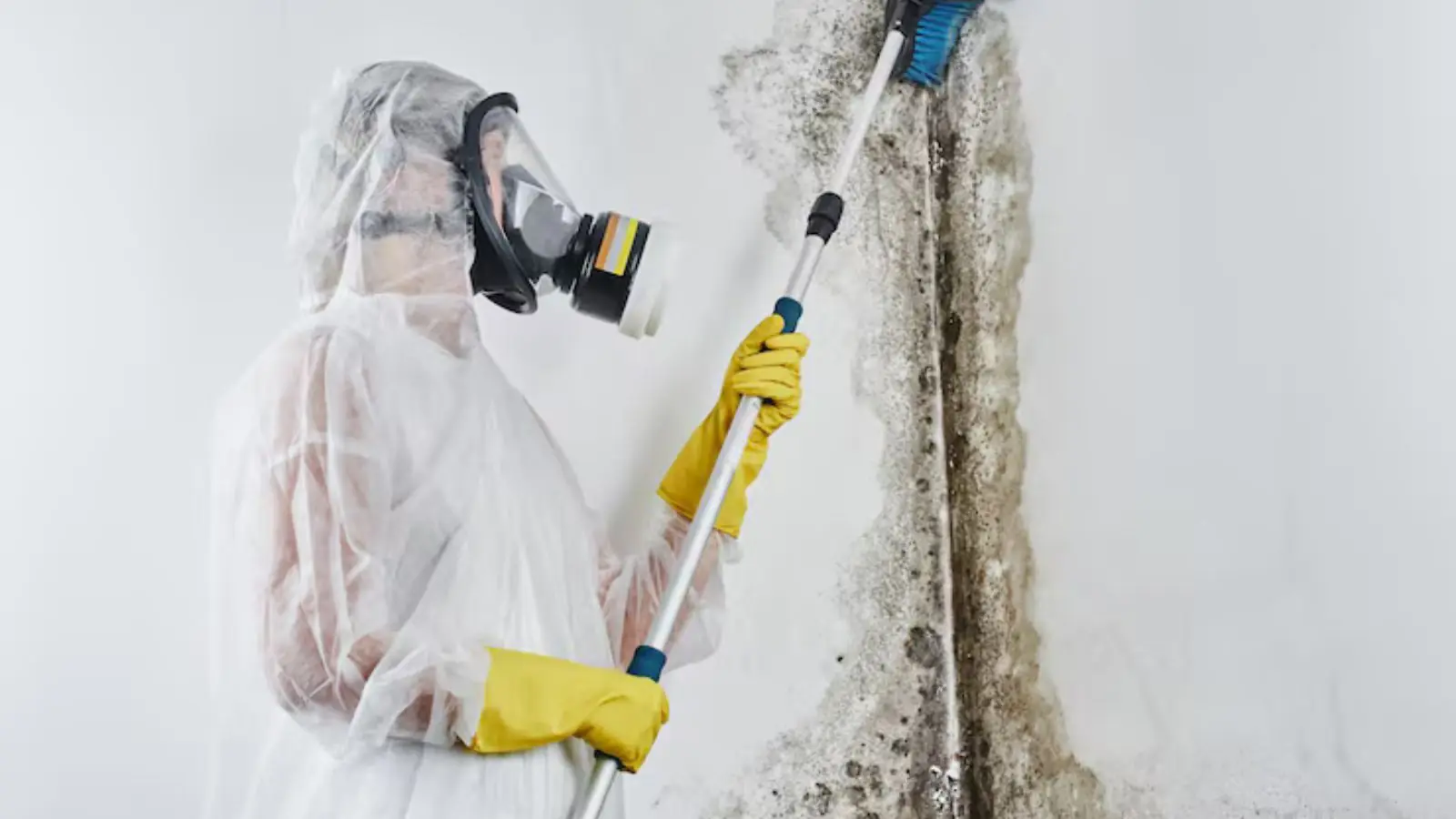
Mold remediation in Tarzana begins with the moisture that fed the growth, and it follows the ANSI/IICRC S520 standard for professional mold remediation. Our line is open 24/7. If you have found mold after a leak, avoid disturbing it, keep the area closed off, and do not run fans that could spread spores through the house.
Most mold calls trace back to a plumbing leak, an air conditioner condensate line, a roof opening or a past flood. Fixing the water source comes first, because remediation without drying only buys time. The drying side is covered on the water mitigation page.
Musty smell, dark spots or a ceiling stain that keeps coming back?
Most people do not search for remediation until something looks or smells wrong. A damp odor in a closet, dark spots on a bathroom ceiling or a wall that never quite dries after a repair are common triggers. Each of these points to moisture that never fully left, and removing the growth while the moisture remains does not last.
Testing and inspection come first when the source is unclear. A trained inspector can use moisture readings, a visual check and, where appropriate, sampling to decide where the problem is and how large it is.
Mold after water damage
Mold needs moisture, organic material and time. EPA guidance on mold, which is widely used in the trade, stresses drying wet materials quickly, often within about a day or two, to prevent growth.
That is why a flooded room or a leaking wall that sat wet for several days is a candidate for inspection even if no mold is visible. Paper-faced drywall, carpet pad and wood framing all provide the organic material mold uses.
Why air conditioning matters in the Valley
Woodland Hills, the next community west of Tarzana, recorded 121 degrees Fahrenheit at Pierce College on September 6, 2020, the highest temperature on record for Los Angeles County according to published accounts. Hot summers mean heavy air conditioning use, and the condensate lines that carry water away from air handlers are a common leak source.
A condensate line that backs up can soak a closet, attic floor or ceiling for weeks before anyone notices. If a ceiling stain appears under an air handler, check the drain line and call before the area begins to smell.
Mold removal and black mold cleanup
Remediation is containment, removal and cleaning, in that order. A crew seals the work area with plastic barriers, runs negative air machines with HEPA filtration so air moves into the contained area instead of out of it, and removes or cleans affected materials by type.
Porous materials such as drywall, insulation and carpet are usually removed when growth is established. Non-porous and semi-porous surfaces can often be cleaned with HEPA vacuuming and damp wiping. Wood framing is cleaned and may be sanded or treated depending on the extent.
The color of mold does not tell you much about how to handle it. A company that calls one color harmless and another dangerous is guessing. This site does not diagnose health effects, and questions about symptoms belong to your physician.
What remediation involves
These are the common stages of a remediation job as described in industry practice.
| Stage | What happens | Why it matters |
|---|---|---|
| Source fix | The leak or moisture is stopped and the area dried | Growth returns if the moisture does |
| Containment | Plastic barriers and negative air with HEPA filtration | Keeps spores from spreading to clean rooms |
| Removal and cleaning | Affected materials are removed or cleaned by type | Takes out the material mold has colonized |
| Post-work check | Visual check and, where needed, independent testing | Confirms the work area is ready for rebuilding |
Mold clearance for a home sale or loan
Buyers, lenders and landlords sometimes ask for proof that mold has been addressed. The usual route is independent clearance testing done by a party that is not the remediation company, which avoids a conflict of interest. Ask your lender or agent what documentation they require, because acceptance is their decision and nobody can promise it ahead of time.
Licensing and standards
ANSI/IICRC S520 is a published standard for professional mold remediation, and you can ask any company whether its crews work to it. Ask whether your state licenses mold work and ask for any license numbers the company claims. The Contractors State License Board lets you look up a contractor's license.
What affects the cost of mold remediation
A remediation quote depends on the size of the affected area and what it is made of.
- Area affectedMore square footage means more containment, labor and disposal.
- Materials involvedDrywall and carpet are removed, while framing is cleaned, and each takes a different amount of time.
- Access and locationAttics, crawl spaces and tight closets add setup time.
- Testing and clearanceInspection and independent clearance testing are separate from the remediation work.
- Source repairFixing the leak or the condensate line is a separate step.
A real number needs a look at the space. Call the Tarzana line, describe the damage and ask how scope and price are explained before work begins.
Insurance and mold
The California Department of Insurance advises policyholders who suspect mold to contact their adjuster right away and not to attempt cleanup themselves, since cleanup can spread spores. Coverage for mold depends on your policy and the cause, so check your policy and ask your insurer before work begins.
Related water damage services
Mold seldom shows up alone. If the cause was a flood, start with flood damage restoration. If the area needs rebuilding after remediation, the next step is water damage repair. Homes in Northridge, north of Tarzana, can reach the same line.
What to do and what not to do while you wait
Small choices before a crew arrives can keep growth from spreading. Follow these steps for safety.
- Do not disturb visible growth by sanding, scraping or brushing it dry.
- Do not run a fan directly at the area, because it can spread spores to other rooms.
- Do not mix cleaning products, since some combinations release harmful fumes.
- Shut off the water source if a leak is feeding the growth.
- Keep children, pets and anyone with health concerns out of the area, and ask a physician about symptoms.
Frequently asked questions
Small, surface-level spots on hard surfaces may be something a homeowner handles with ordinary care, but larger or hidden growth, or anything after a flood, is a job for a trained crew. Contact your insurer first if you plan to claim.
Testing is useful when the source is unclear, when a buyer or lender asks for it, or when you want independent proof after remediation. Ask for testing by a party that is not doing the removal.
Nobody can promise that. Growth returns when moisture returns, so source repair and drying are part of the plan.
It is a published industry standard for professional mold remediation. You can ask any company whether its crews work to it.
Remediation removes or cleans the affected material by type. A bleach wipe on porous material leaves the growth behind, so crews rely on removal, HEPA vacuuming and cleaning.