
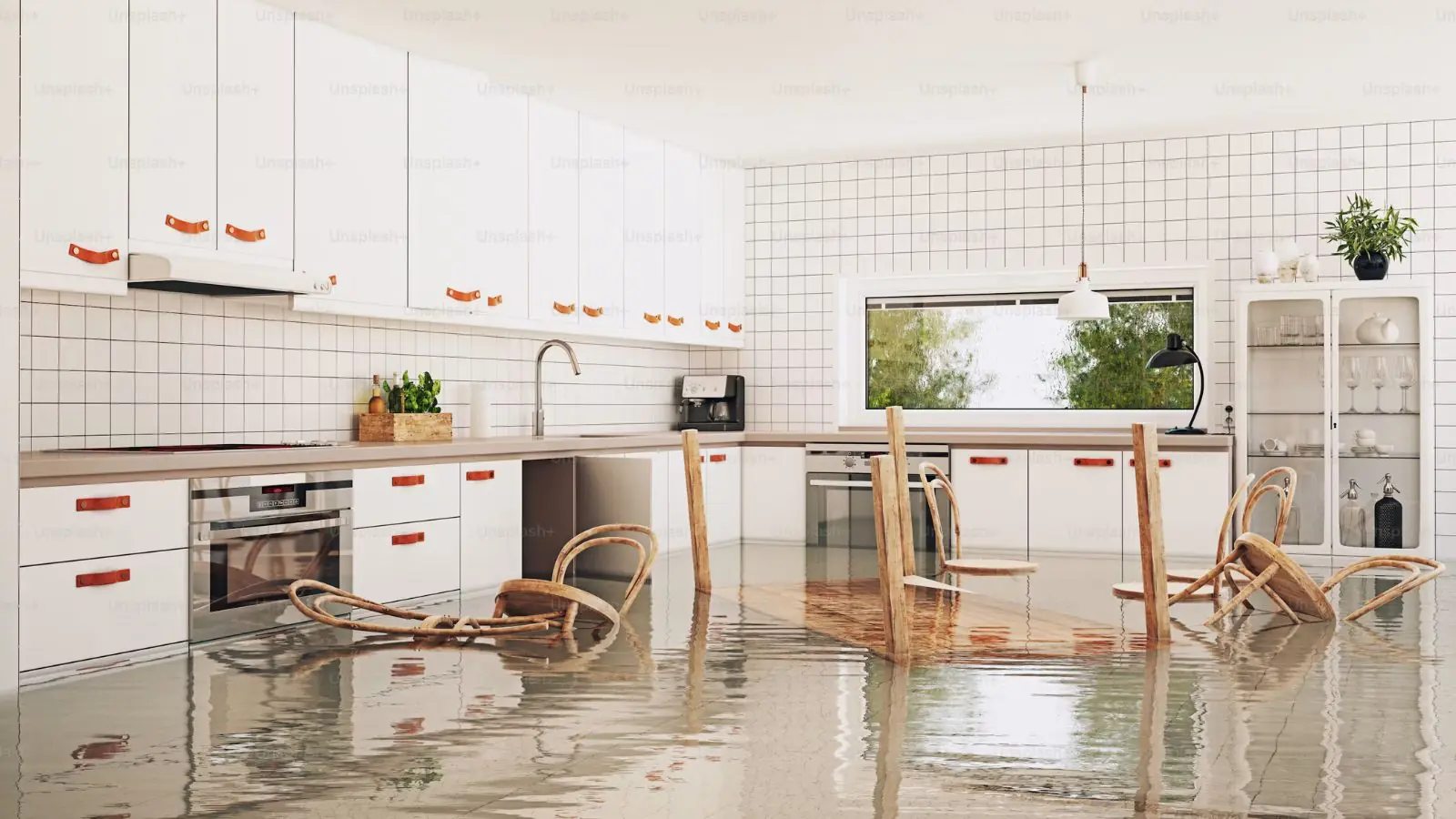
Whether to file a claim comes down to three numbers and one question. The numbers are your deductible, the likely repair cost and what your policy covers for this kind of loss, and the question is how sure you are about the cause. Small losses sometimes cost less than the deductible, and large or unclear ones usually deserve a call to your insurer.
This guide gives you a way to compare those pieces before you decide. It is general information, and your agent or insurer is the right source for policy-specific answers.
Start with the cause
Policies often treat a sudden and accidental event, such as a burst supply line or an appliance hose that splits, differently from a slow leak or neglected maintenance. The California Department of Insurance states that homeowners policies cover other kinds of water damage but not flood.
If you are not sure what caused the damage, say so when you call. A plumber's report or a moisture map from a crew can help identify where the water started, and an adjuster will want that history.
Compare your deductible to the real cost
Your deductible is what you pay before coverage starts. If a repair is clearly smaller than the deductible, filing may not change anything except a record. If the loss is larger, or if it is hard to tell how deep the damage goes, you will likely want to report it.
The mistake to avoid is estimating by eye. Water travels, and the damage behind a wall can be many times what shows on the paint. A moisture reading before you decide gives you a better number.
A quick decision framework
Use this as a conversation starter with your agent, not a rule.
| Factor | Leans toward filing | Leans toward paying yourself |
|---|---|---|
| Cause | Sudden pipe or appliance failure | A small, slow leak found and fixed early |
| Size | Multiple rooms, wet structure, flooring or cabinets | One small area, quickly dried |
| Deductible | Well below the likely cost | At or above the likely cost |
| Hidden damage | Moisture inside walls or under floors | Meter readings show dry |
| Third parties | A neighbor's leak or a contractor's error is involved | No other party is involved |
Ask how a claim could affect your policy
Ask your agent how a claim, or even a reported inquiry, could affect your premiums or renewal. Practices differ among companies, and the answer depends on your history. Get the answer before you decide, and write down the date and the name of the person you spoke with.
The California Department of Insurance also advises keeping a log of calls and copies of correspondence, which protects you whichever way you go.
What the numbers look like in Tarzana
Census-based figures for ZIP 91356 list a median home value of roughly $1.2 million. Homes at that value often have hardwood floors, stone, custom cabinets and finishes that raise repair costs fast, which makes a loss more likely to exceed a deductible than it would in a simpler house.
Foothill lots near Topanga State Park and Caballero Canyon also add another layer. Runoff and storm damage are excluded as flood on a typical homeowners policy, so check the FEMA Flood Map Service Center for your address and ask about separate flood coverage.
Protect the property either way
Filing or not, take reasonable steps to stop the damage from spreading. The Department of Insurance advises securing the property and keeping receipts, and policies often require it. Emergency drying is a protective step and not a permanent repair.
If water is still active, call the line for emergency water removal. For help understanding what was wet, water mitigation describes the readings and documentation a crew can supply.
Questions to ask before you decide
Filing is a financial decision as much as a repair decision. Start by finding your deductible, since many losses are close to or below it. Then separate what is damaged from what the policy may cover, because maintenance items and long-term seepage are often handled differently from a sudden event.
- What is the deductible, and is it a flat amount or a percentage?
- Was the cause sudden, such as a burst pipe, or gradual?
- Is the estimated repair well above the deductible?
- Does the policy have a time limit for reporting a loss?
- Could a claim affect future premiums or renewal?
Talking with your insurer
You can ask general questions about coverage before you open a claim, but many insurers log any call as a report. Ask how your carrier treats an inquiry, and write down the name of the person and the date.
Do not wait if you suspect a covered loss. Policies often require prompt notice, and delay can complicate the review. Keep damaged materials until the adjuster has seen them or approved disposal.
Stopping further damage is your duty either way
Most policies expect you to take reasonable steps to prevent more damage, such as stopping the leak and drying wet areas. These costs are often reimbursable if the loss is covered, so keep receipts.
A crew can handle emergency drying under water mitigation while you decide about a claim, and the documentation they create can support whichever path you choose. The same goes for pumping and extraction under emergency water removal.
If you decide not to file
Keep the same records anyway. Photographs, receipts and moisture readings are useful if damage appears later or if you sell the home. Pay for repairs from a written bid, check that any contractor is licensed and keep the invoice. Neighbors in Sherman Oaks and Encino can call the same line.
Frequently asked questions
Standard homeowners policies leave out flood, according to the California Department of Insurance, and flood insurance is sold separately. Look up your address on the FEMA Flood Map Service Center and ask your agent.
Yes. A moisture reading from a restoration crew is an independent record of what was wet, and it can be shared with your adjuster.
Policies and regulations contain time limits. Ask your insurer for the dates that apply to your policy and report promptly.
You may decide to pay for the repair yourself. Get a written bid, keep the records and have the area read by a meter so you know the wall is dry before it is closed.
That is risky. Many policies require prompt notice and an opportunity to inspect, so ask your insurer before discarding materials.