
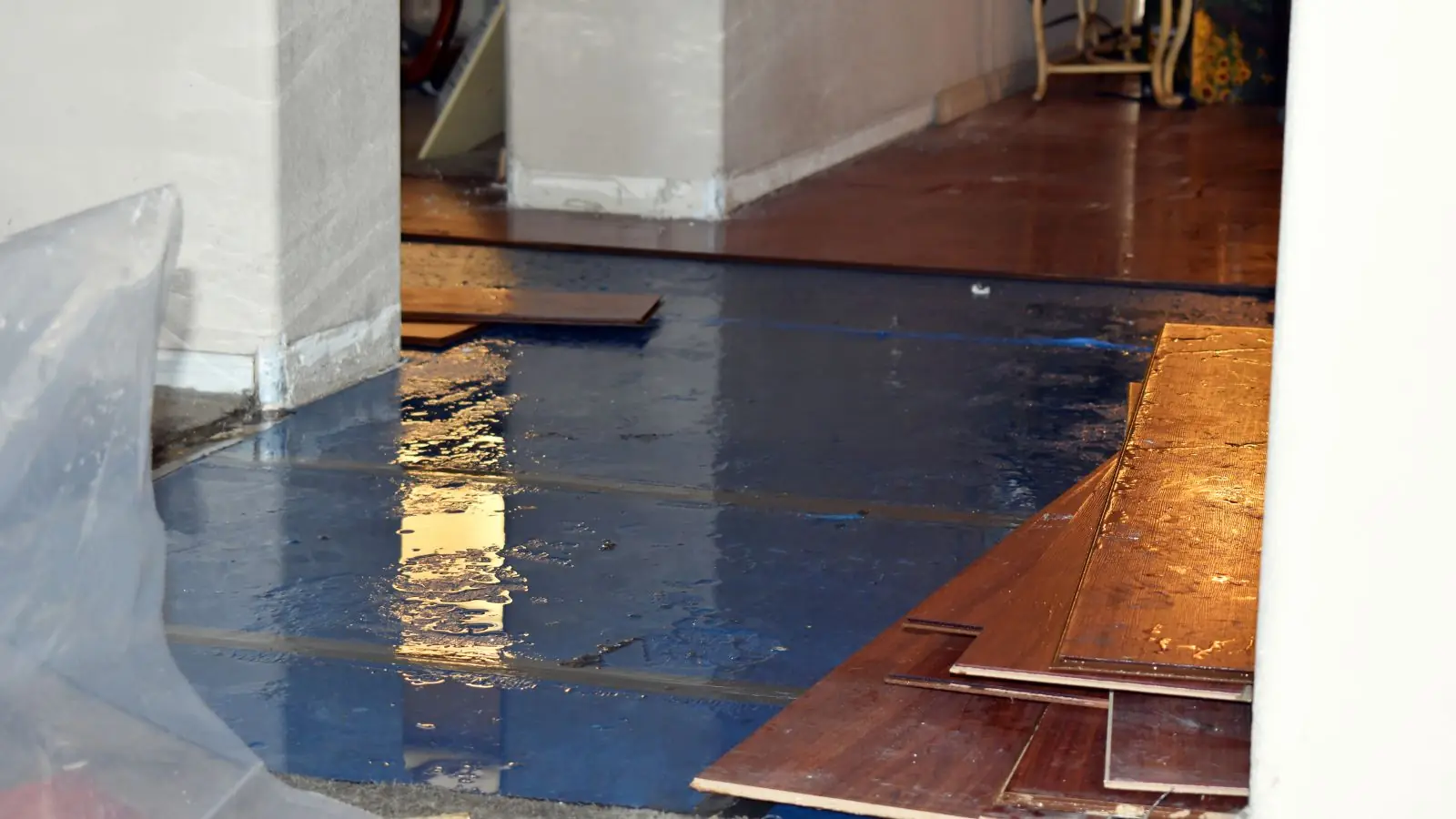
To repair water damage on wood, dry it completely first, then decide whether it is stained, swollen, warped or rotted. Stained and lightly swollen wood can often be sanded and refinished, and soft or rotted wood is replaced. Rushing the finish before the wood is dry is the most common reason a repair fails.
This guide covers trim, furniture, cabinets, floors and framing, with a plain look at what each can handle. It sits alongside the water damage repair page, which describes the rebuild as a whole.
Step one: dry the wood
Wood absorbs water and gives it back slowly. A piece that feels dry on the surface may still be wet inside, so a moisture meter is the reliable test. Open cabinet doors, remove drawers, pull baseboards where you can and keep air moving across the surface.
A dehumidifier helps, and heat does not. Fast heat can crack wood or lift finishes. Slow, steady drying keeps the shape. For a larger area, crews use air movers and dehumidifiers and read the wood daily.
Step two: judge what you have
Press a screwdriver tip gently into the wood where it is darkest. Sound wood resists, and rotted wood gives way easily. Stains alone, such as water rings or gray discoloration, are surface problems. Swelling, cupping and splitting mean the wood fibers took on water.
- Surface stains: often treated by sanding, bleaching or refinishing once the wood is dry.
- Swelling that goes down as the wood dries: often refinished.
- Cupped or crowned boards: may flatten as they dry, or may need planing or replacement.
- Soft, crumbling or musty wood: replace it and find the source of the moisture.
What to expect by type of wood item
These are general outcomes. A careful look after drying decides each case.
| Item | Often saved when | Often replaced when |
|---|---|---|
| Baseboards and trim | Wet briefly and dried in place | Swollen, split or showing soft spots |
| Solid wood furniture | Dried slowly and refinished | Joints have separated or veneer has lifted |
| Cabinet doors and faces | Solid wood dried quickly | Particle board has swelled |
| Wood framing | Dried and cleaned, still sound | Rotted or crumbling |
| Wood subfloor | Dried to dry standard | Delaminated or soft |
Step three: refinish or replace
Once the wood is dry, sand lightly, fill any gaps with wood filler, then prime, stain or paint to match. A stain-blocking primer helps on water rings that bleed through paint. Match the sheen as well as the color, since a glossy patch on a satin wall draws the eye.
Where wood is replaced, treat the cut ends and the back face with a primer or sealer before installation. If the cause was a leak, fix that first and keep the area open until readings confirm it is dry.
Older wood and older paint in Tarzana
Edgar Rice Burroughs bought the Tarzana tract on March 1, 1919 and later subdivided it, so the neighborhood's houses date across a long span of years. Older trim and cabinets can carry old paint, and federal rules for work that disturbs paint in homes built before 1978 require lead-safe practices.
Practically, that means asking before you sand. If your house predates 1978, have the paint tested or use a contractor who follows lead-safe work rules, and do not dry-sand painted trim yourself. Tarzana's dry summers help wood dry after a repaired leak, but winter rain can bring a new round of moisture through a roof or a wall.
Identify the kind of wood first
Solid hardwood, engineered flooring, plywood subfloor and painted trim all respond to water differently. Solid wood can often be dried and sanded, while engineered flooring with a thin veneer may delaminate and need replacement.
Look at the edge of a board or a transition strip to see the layers. Check whether the wood is finished, unfinished or covered with laminate, because the finish changes how quickly water gets in.
Drying comes before repair
Wood holds water and releases it slowly, so it must be dry before sanding, filling or refinishing. Repairing a damp board locks the moisture in and invites warping, staining or growth.
- Remove standing water and lift wet rugs or mats.
- Run fans and a dehumidifier to bring the room down gradually.
- Avoid heat guns or direct heat that can crack boards.
- Take moisture readings, not just visual checks.
- Wait until readings are stable before any repair.
Typical repair paths
Light cupping often settles back as the board dries, and a refinish may be enough. Black staining, deep softness or crumbling edges mean fibers have broken down and the piece should be replaced. Stains from old leaks can sometimes be bleached or sanded, depending on depth.
Drying and tear-out of wet flooring are part of water mitigation, and the rebuild falls under water damage repair. Matching an existing floor can take care, since older finishes and species do not always align with new stock.
When the repair becomes a rebuild
Large areas of wet drywall, saturated insulation or sagging ceilings point to a rebuild rather than a wood refinish. California requires a contractor license for jobs of $1,000 or more in labor and materials, so verify a rebuild contractor's license on the Contractors State License Board site before you sign.
Neighbors in Reseda and Woodland Hills can call the same line. If the wood is still wet, start with water mitigation before any repair.
Frequently asked questions
Often, if it is dried slowly and the joints and veneer are intact. Rings and gray stains can be treated, and warped or separated pieces may need a furniture repair specialist.
Only when the wood is dry and sound. Use a stain-blocking primer first, since water stains often bleed through ordinary paint.
Not without testing. Federal rules require lead-safe work practices when painted surfaces in pre-1978 housing are disturbed, so test the paint or hire a contractor trained for it.
Until a moisture meter shows it at its normal level for your home. That can take days, and the meter, not the calendar, decides.
Often, if water is removed quickly and the wood is dried steadily. Time and depth of exposure decide the outcome.