
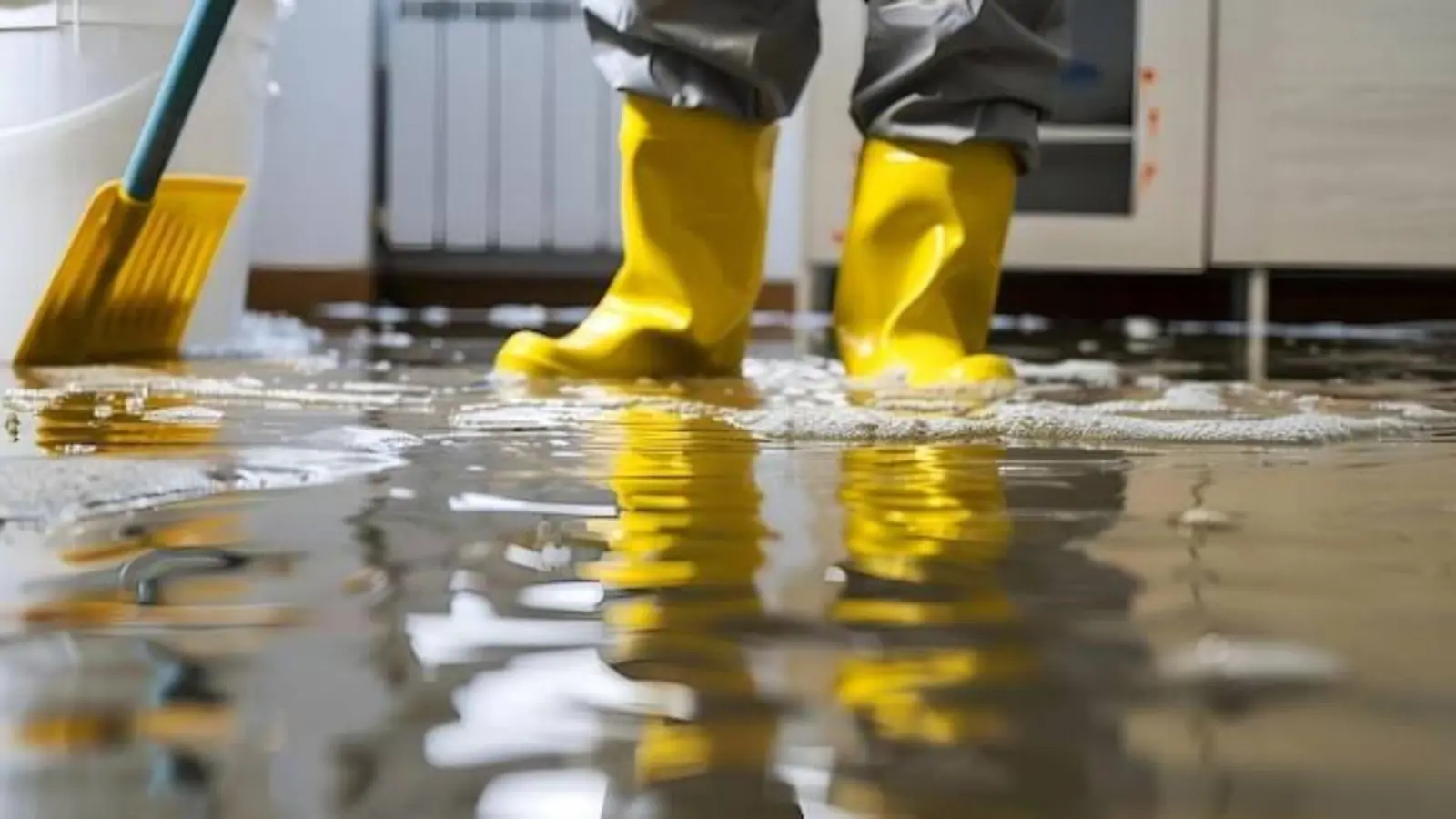
Flood damage cleanup after a storm starts with safety, then documentation, then removal of contaminated materials and drying. Storm water that enters a Tarzana garage or home should be treated as contaminated, because it has crossed streets, soil and drains. This guide covers the first hours and the decisions that follow.
First: safety
Stay out of standing water, especially near outlets, appliances and the panel. Cut power only if the panel is dry and reachable. If you smell gas or see sparks, leave and call 911. Keep children and pets out of the affected area, and wear boots and gloves if you must enter.
Do not use household vacuums on wet floors and do not start a generator indoors. Those are common causes of injury after storms.
Second: document
Take photos and video before anything is moved. Capture the water line on walls, damaged items and the source of entry. The California Department of Insurance publishes top tips for people affected by winter storms that include documenting damage, keeping receipts and contacting your insurer promptly.
Write down what was affected and when it started. A short, dated list is easier to use later than memory.
Third: remove what cannot be saved
Contaminated water changes the rules. Carpet, pad, upholstered furniture, mattresses and particle board that sat in storm water are usually discarded, while tile, concrete and solid wood can be cleaned and dried. Drywall that wicked water is cut out above the wet line.
This is the work crews do with protective equipment and a plan. See flood damage restoration for the full process and water damage cleanup for what is removed and sanitized.
What is usually saved and what is usually discarded
These are general outcomes after Category 3 storm water. A crew checks each material.
| Material | Often saved if cleaned | Often discarded |
|---|---|---|
| Concrete and tile | Yes, cleaned and dried | Rarely |
| Solid wood furniture | Sometimes, cleaned and dried | If it stayed wet for days |
| Carpet and pad | Rarely | Usually |
| Drywall | No, if it wicked water | Cut out above the wet line |
| Upholstery and mattresses | Rarely | Usually |
Storm season and flood zones in Tarzana
Tarzana's rain is concentrated in winter, with the wettest stretch from roughly January through March. Use the FEMA Flood Map Service Center for your address, and Los Angeles County Public Works also publishes a flood zone determination website for properties in the county.
Per the California Department of Insurance, a homeowners policy does not pay for flood, and that cover is bought separately. If you do not have it, document everything anyway, since the information still helps when you apply for any available assistance. Homes near the foothills along Topanga State Park deal with runoff from slopes above, so clear drains and gutters before storms.
Fourth: dry the structure
After removal, the structure needs to dry. Crews use air movers and dehumidifiers and read moisture daily until materials are dry. Starting early is what keeps mold from becoming a second problem, and the process is on the water mitigation page.
Do not rebuild until readings are dry. If you suspect mold, call before you touch it.
Why storm water is treated differently
Water that enters from outside crosses soil, gutters and pavement, so it carries sediment and contaminants. Under ANSI/IICRC S500 terms, it is generally treated as Category 2 or Category 3 water, not clean water from a supply line.
That classification affects what can be saved. Porous materials such as carpet, pad and drywall that touched this water are commonly removed, while hard surfaces can usually be cleaned and disinfected.
First hours after water enters
Safety comes first when floodwater is in the home. Avoid standing water if electrical outlets or cords are wet, and do not use household vacuums on it. Wear boots and gloves, and keep children and pets out of the area.
- Turn off power to affected rooms at the breaker if you can reach it safely.
- Photograph the water line and damaged items.
- Lift furniture and valuables to dry spots.
- Open doors and windows if the weather allows.
- Call a crew to pump out and begin drying.
What the cleanup involves
Crews pump out standing water, remove contaminated materials, clean and disinfect surfaces, then dry the structure with air movers and dehumidifiers. Moisture readings guide when the work is finished, not a fixed number of days.
The pumping and drying side overlaps with emergency water removal and flood damage restoration. Rebuilding after demolition is handled separately under water damage repair.
Documenting for insurance
Standard homeowners policies often treat surface flooding differently from a plumbing leak, and flood coverage is usually a separate policy. Read your declarations page and ask your insurer what applies. Keep receipts, photos and a list of discarded items, because your adjuster will ask for them.
If the water came from a drain
Sewage backups are different. Stop using water, keep people and pets out and do not clean it yourself. Call the utility if the main may be involved, and call a crew for the cleanup inside the house. Neighbors in Reseda and Northridge can call the same line.
Frequently asked questions
Flooding depends on your address. Look up your flood zone on the FEMA Flood Map Service Center, and ask your insurance agent about flood coverage. Foothill homes also deal with runoff from slopes.
If it is rising, near electrical equipment or entering living space, yes. Call the line and describe the depth and the source.
Flood is excluded from homeowners policies, the Department of Insurance notes, so coverage would come from a separate flood policy. Check yours and ask your agent.
Small, shallow water on hard surfaces may be manageable with protection. Deep or contaminated water, or anything touching drywall and carpet, is better left to a crew.
Carpet exposed to contaminated water is usually removed. Clean-water exposure caught quickly can sometimes be dried, so ask a crew to check.