
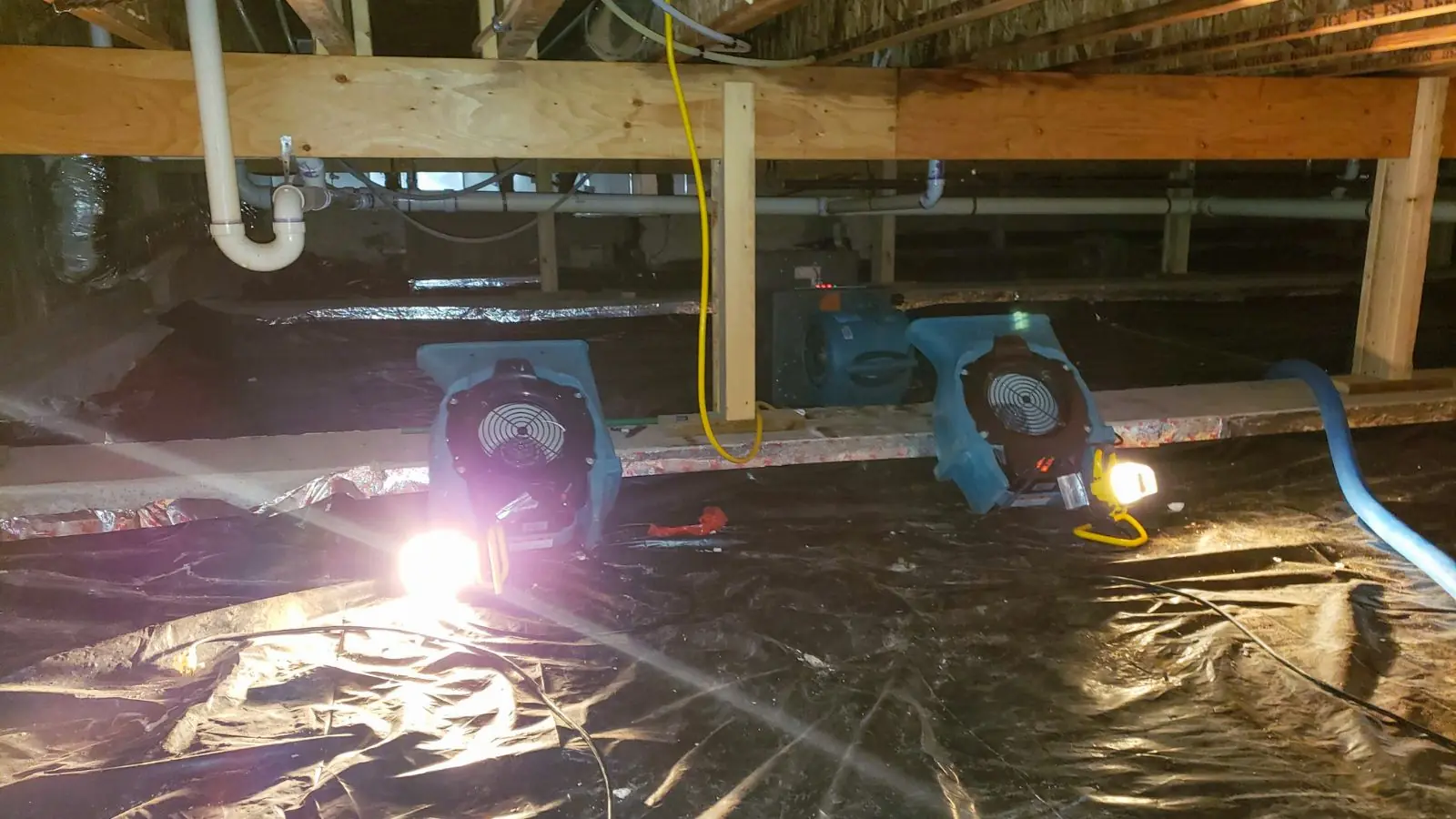
Crawl space mold removal costs depend on the size of the area, how hard it is to reach, what the growth is on and what is feeding it. No honest article can print one number, and no phone call can either. What you can do is learn the factors, ask for a written bid and compare bids line by line.
This guide covers removal and treatment together, since homeowners usually need to know about both. It also explains why fixing the moisture source can cost more than the cleaning itself.
What drives the price
A crawl space is a tight, low area, so everything takes longer than it would in a room. These are the main factors a crew weighs.
- Area and height: more square footage and lower clearance mean slower work.
- Access: a small hatch, tight duct runs and standing water add setup time.
- Materials affected: wood framing is cleaned, while insulation and vapor barriers are often removed.
- Containment and air filtration: sealing the space and running HEPA filtration add steps and equipment.
- Moisture source: a plumbing leak, a drainage problem or high humidity must be fixed or the growth returns.
- Testing and clearance: inspection and independent clearance testing are separate from the removal.
Removal versus treatment
Removal takes out materials mold has colonized and cleans the framing. Treatment may follow, such as applying an antimicrobial product or a coating on framing after it is cleaned and dry. Treatment alone does not fix a wet crawl space, and a coating over wet wood fails.
Some homeowners add a ground vapor barrier or improved ventilation, which are moisture-control steps outside the mold work. Ask for those as separate line items so you can see what each does.
Reading a bid line by line
The California Department of Insurance recommends getting written bids with prices listed line by line. For a crawl space job, expect lines like these.
| Line item | What it covers | Ask |
|---|---|---|
| Inspection and testing | Finding extent and source | Who does it, and is it independent? |
| Containment and air filtration | Sealing and HEPA air | How many machines and for how many days? |
| Removal | Insulation, barrier and damaged wood | Which materials, and why? |
| Cleaning | HEPA vacuum and wipe of framing | What method is used? |
| Moisture control | Vapor barrier or drainage fixes | Is it included or separate? |
| Clearance testing | Confirming the work is complete | Is it done by a third party? |
Crawl spaces in Tarzana homes
Tarzana's houses span a long range of building years, and the older end is where raised foundations and crawl spaces are most likely. If your home has one, the wet season, concentrated from roughly January through March, is when drainage problems and plumbing leaks show up under the floor.
Ask the Los Angeles Department of Building and Safety whether work on the crawl space or foundation requires a permit, and use the Contractors State License Board lookup to verify any contractor's license. California requires a license for jobs of $1,000 or more in labor and materials, and crawl space work usually clears that threshold.
Insurance and crawl space mold
Coverage depends on the cause. Mold that follows a sudden covered leak may be handled differently from mold that grew over months of humidity. The California Department of Insurance advises contacting your adjuster right away if you suspect mold and not attempting cleanup on your own, since that can spread spores.
Ask your insurer before work begins, keep every invoice and photograph the space first. For more on the process, see mold remediation.
What actually moves the price
Crawl space work is priced by the effort needed to reach and treat the area, not by square footage alone. Low clearance slows every task, and a crew working on their backs with HEPA vacuums can cover less ground per hour than in an open room.
- Access: size of the hatch and the height of the space.
- Extent: whether growth is limited to a few joists or covers the subfloor.
- Material: insulation and vapor barrier that must be removed and replaced.
- Moisture source: a leak, plumbing, grading or ventilation problem to fix first.
- Drying: equipment time needed after cleaning.
Why quotes can differ so much
Two crews can look at the same space and describe different scopes. One may plan to clean only visible growth, while another includes sealing and moisture control. A low number that leaves out the moisture source often leads to a second visit.
Ask each crew to write down what is included, what is excluded and what would change the scope once the space is opened. A clear scope lets you compare offers fairly, even if the totals are far apart.
Questions that protect you
Before you agree to anything, ask how the area will be contained, how waste will be handled and how the crew will confirm the space is dry afterward. Ask which standard they follow. For mold work, ANSI/IICRC S520 is the common reference, and mold remediation crews should be able to describe how they apply it.
If a pipe or drain caused the problem, request that it be repaired before treatment starts. Standing water in a crawl space also needs emergency water removal before anything else can happen.
Questions that protect you
Ask whether the crew works to ANSI/IICRC S520, who does the testing and whether the bid includes moisture control. Ask how long the work will take and whether any materials will be left in place. A bid that lists scope, quantity and method is worth more than a low total with no detail.
For leaks that feed the growth, a drying plan from water mitigation may be part of the job. Homeowners in Encino and Reseda can call the same line for an assessment.
Frequently asked questions
The size of the area, the access and the materials decide the price, and none of that is clear until someone looks. A written bid after an inspection is the reliable route.
Treatment alone can be a smaller job, but it does not replace removal when growth is established, and it fails if the space is still wet.
Often a vapor barrier helps control ground moisture, but the answer depends on your drainage and ventilation. Ask a crew or a contractor to look and to list it as a separate item.
Not always, but rules vary by scope. Ask the Los Angeles Department of Building and Safety about your address before any structural or foundation changes.
It depends on the cause and your policy language. Sudden water events are sometimes treated differently from long-term seepage, so read the policy and ask your insurer.