
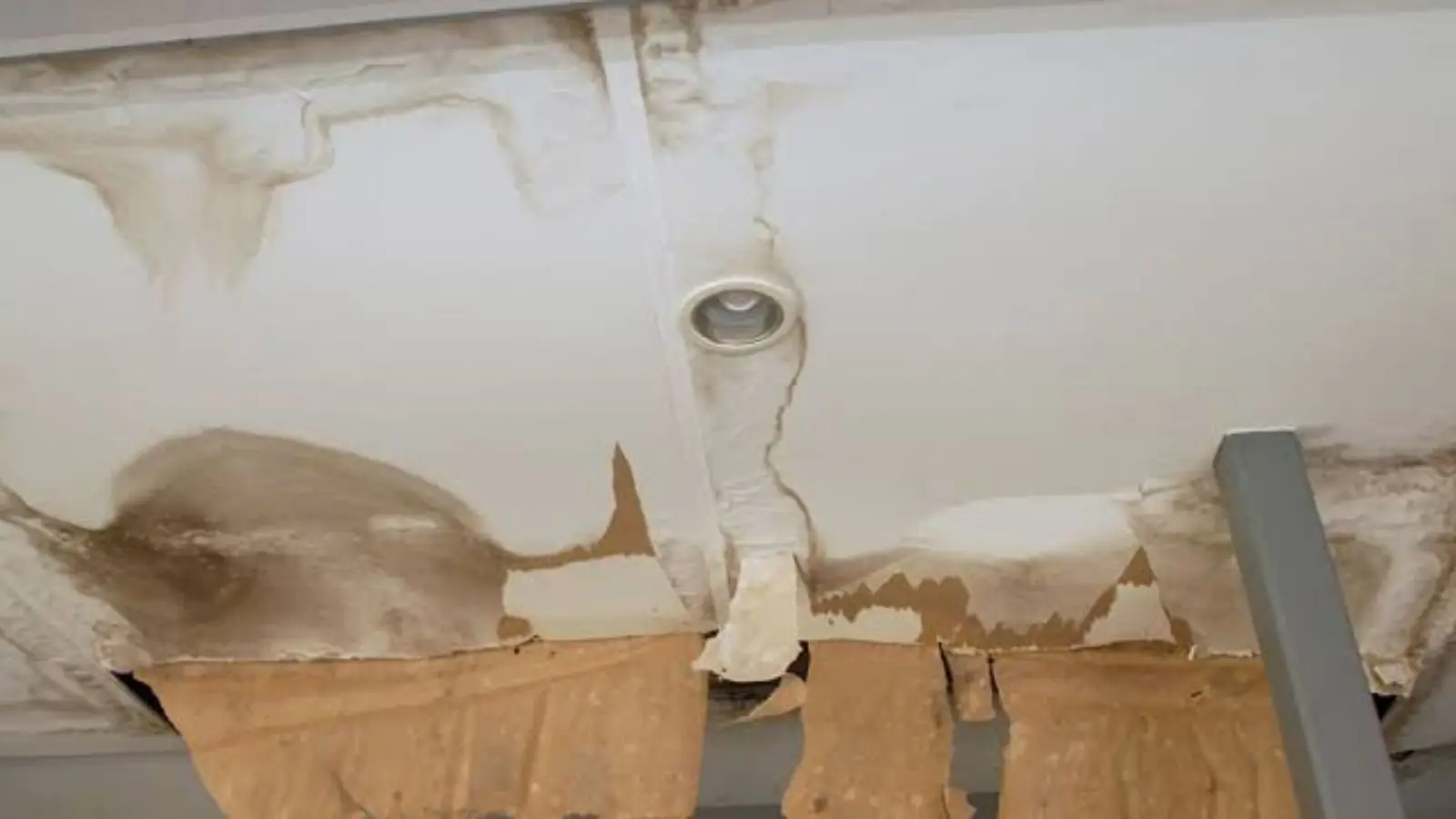
A ceiling stain is a symptom, and the repair depends on whether the drywall is still solid and the leak is stopped. Dry, firm drywall with a brown ring can often be primed and repainted, while a sagging, bubbled or soft ceiling needs to be cut out and replaced. Fix the water source before either one.
Read the ceiling before you touch it
Look and press gently. A flat, brown or tan ring that is dry to the touch is a past leak. A damp spot, a bubble or a sag means water is still in the drywall or insulation above it.
If a ceiling is sagging, stay out from under it. Wet drywall is heavy and can come down without warning. Poke a small hole at the lowest point to let trapped water drain into a bucket if you can do so safely, and call for help rather than wait for a collapse.
Find the source first
Water reaches a ceiling from a roof opening, a plumbing leak in the floor above, an air conditioner in the attic or a failed seal around a vent. The stain shows where the water came through, not always where it started.
A roof leak usually shows up after rain and dries between storms. A plumbing leak can run steadily and may affect a bathroom or kitchen above. A moisture meter and an attic inspection locate the source better than guessing from the stain.
Fix or replace
A crew confirms with readings, but these are the usual outcomes.
| Ceiling condition | Often | Option |
|---|---|---|
| Dry, firm, stain only | Repairable | Stain-blocking primer and repaint |
| Dry, small cracked or peeling area | Repairable | Patch, tape, texture and paint |
| Soft, bubbled or sagging | Replace | Cut out to dry drywall and replace |
| Wet insulation above | Replace | Dry the framing and replace insulation |
| Stain that returns | Leak persists | Find the source before repainting |
How the repair goes
After the source is fixed and the structure is dry, the crew cuts out damaged drywall back to a clean edge, checks the framing and insulation, installs new drywall, then tapes, textures and paints. Matching an existing texture takes skill, and paint on a repaired ceiling often needs a full coat across the whole ceiling to blend.
The broader process is on the water damage repair page, and the drying that comes before it is on water mitigation.
Ceilings and the rainy season in Tarzana
Tarzana's rain is concentrated in the winter, with the wettest stretch from roughly January through March, which is also when roof leaks announce themselves on ceilings. A ceiling stained in February often reflects a leak that began on the roof weeks earlier and traveled across a rafter.
In older houses, ceilings may also hold hidden hazards. Textured ceilings from earlier decades can contain asbestos, and old paint can contain lead, so test before scraping or sanding. Ask the Los Angeles Department of Building and Safety whether a larger ceiling repair needs a permit, and check that your contractor's license shows on the Contractors State License Board site.
Insurance and a ceiling claim
A sudden roof or plumbing failure may fall under your policy, though slow leaks and neglect are often treated differently. The California Department of Insurance advises photographing damage, keeping receipts and getting written bids that list prices line by line. Ask your insurer whether the adjuster wants to see the ceiling before it is opened.
Homeowners in Woodland Hills and Encino can call the same dispatch line for a meter check.
Reading the stain
A ceiling stain is a record of what happened above it. A tight brown ring with a clear edge often means a one-time leak that has dried. A stain with several rings means the area has been wet more than once, and a spreading yellow patch means water is still arriving.
Touch the area gently. If the paint is bubbling, the drywall behind it is holding water. If the board feels soft or crumbles, it has lost strength and should come down before it falls.
Sagging ceilings and safe steps
A ceiling that sags under water is heavy and can drop without warning. Keep people and pets out from under it. Place a bucket on a drop cloth, then use a screwdriver to make a small hole at the lowest point so water drains in a controlled way.
- Shut off water to the room above if the source is a supply line.
- Turn off power to any light fixture in a wet ceiling.
- Photograph the damage before opening anything.
- Do not paint over a stain until the board is dry and the source is fixed.
Patch, replace or open the whole section
Small, dry, firm areas can be primed with a stain-blocking product and repainted. Wet or soft areas need the board cut out to dry the cavity and check for insulation and framing damage. When the cause was rain, tile, plumbing or an air handler, the source must be repaired first.
Drying and tear-out belong to water mitigation, and rebuilding the ceiling falls under water damage repair. Texture matching is a finish detail that depends on the original ceiling style. Drying practice follows ANSI/IICRC S500.
While you wait for help
Move furniture from under the stain, put a bucket under drips, turn off any light on the wet ceiling and shut off the water if a pipe above is the source. Photograph everything. Do not paint over a wet ceiling, because the stain will return and the paint will blister.
Frequently asked questions
Only if the ceiling is dry and solid and the leak is fixed. Use a stain-blocking primer first. A soft or sagging ceiling should be replaced.
A bubble means water is trapped in the drywall. Treat it as urgent, stay out from under it and call so a crew can drain and dry it.
Until the roof is repaired and the structure reads dry. Repairing earlier can trap moisture.
In older houses, yes. Textured finishes from earlier decades can contain asbestos, so test before scraping or sanding.
Only after the board is dry and the leak is fixed. Painting over a wet area traps moisture and the stain tends to return.