
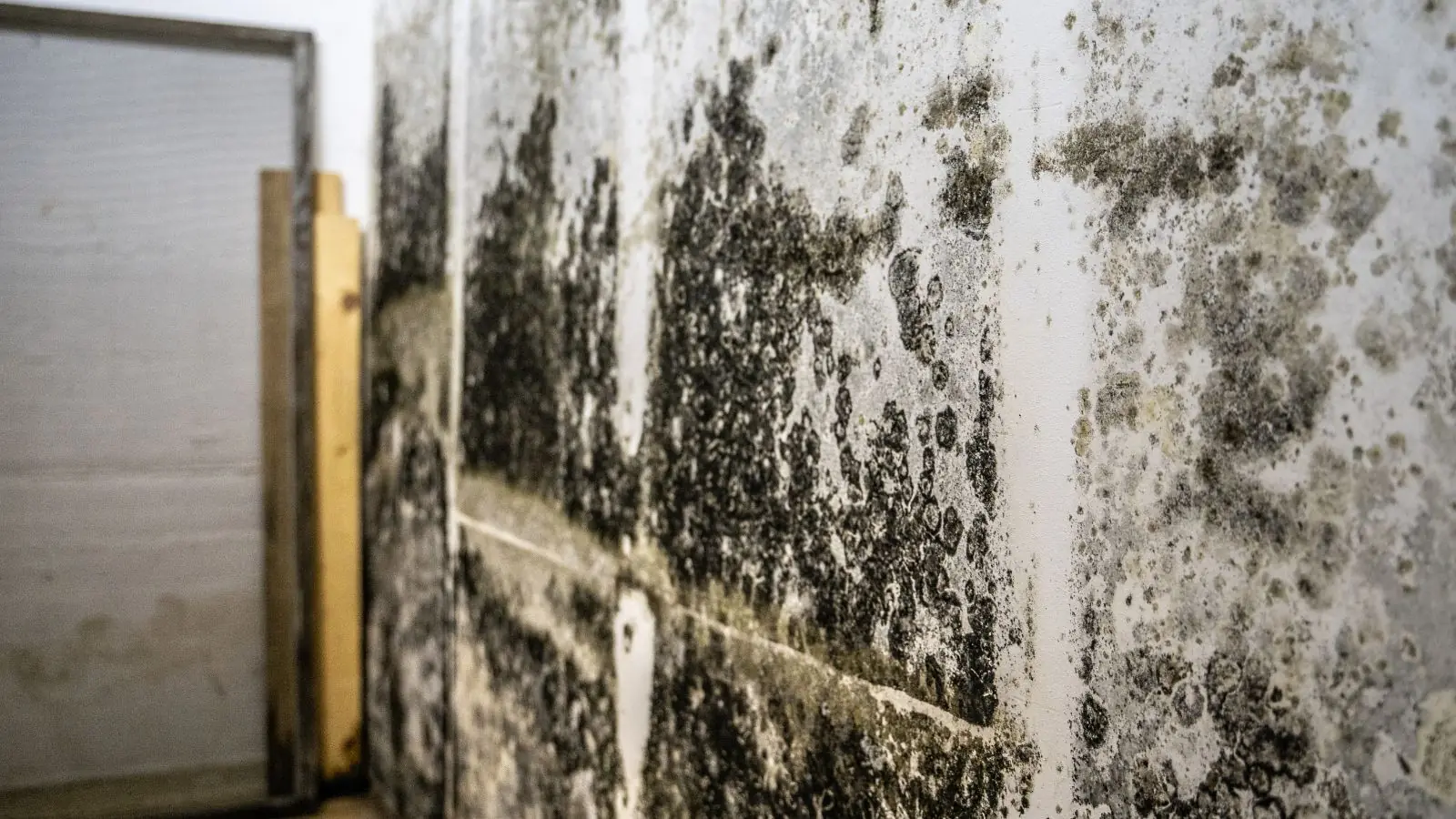
Getting rid of mold in a basement means finding the moisture that fed it, then removing the growth and drying the space. If your Tarzana home has a basement, a lower-level room or a below-grade garage, those are the places where water collects, so start there. Small spots on hard surfaces may be a homeowner job, while larger areas or anything after a flood belong to a trained crew.
This guide covers both paths, including the steps in order, what to avoid and how to decide when to call.
Step one: find where the water comes from
Lower levels collect moisture from more sources than upper floors. Plumbing leaks, a failed sump pump, a roof or gutter that dumps water near the foundation, seepage through a retaining wall and condensation on cold pipes are all common.
Tape a square of plastic wrap to a suspect wall for a day, then check whether the wetness is on the wall side or the room side. Moisture on the wall side points to seepage, while moisture on the room side points to condensation. That small test saves guesswork before anyone cuts anything.
Step two: decide how big the problem is
Size and material decide who does the work. A small patch on a painted concrete wall is a different job from a stain across a drywall ceiling or growth inside a finished wall.
- A small area on a hard surface such as concrete, tile or sealed wood may be cleaned with detergent and water and good ventilation.
- Growth on drywall, insulation or carpet usually means removing the material, not cleaning it.
- Growth that returns after cleaning, or a musty smell with nothing visible, suggests hidden moisture that needs a meter.
- Any mold after sewage or flood water should be left to a crew.
Step three: dry the space
Drying comes before and after cleaning. A dehumidifier sized for the room, steady airflow and fixed drainage give materials a chance to dry. Without them, any cleanup is temporary.
Crews use moisture meters to confirm that concrete, framing and drywall are dry, since surfaces can feel dry while the core is still wet. The drying methods are described on the water mitigation page.
Lower levels in Tarzana: what to check about your own house
Tarzana's southern boundary is Topanga State Park in the Santa Monica Mountains, so homes near the foothills can have retaining walls and slopes that push water toward lower rooms. Use the FEMA Flood Map Service Center to look up the flood zone for your address, and ask the Los Angeles Department of Building and Safety about permit requirements before you alter a retaining wall or drainage.
The Sepulveda Dam, completed in 1941 on the Los Angeles River in Encino, reflects how seriously this part of the Valley takes flooding. The 1938 river flood killed 144 people according to published accounts. For a homeowner the takeaway is local and specific: know your zone, keep gutters and drains clear, and do not wait for the rainy season to inspect a lower level.
When to call a crew
Call if the growth is larger than a small patch, if it is on drywall or insulation, if a leak or flood caused it or if you smell mold and cannot find it. Crews contain the area, run HEPA air filtration and remove affected materials by type, following ANSI/IICRC S520.
If a policy may respond, contact your insurer first. The California Department of Insurance advises policyholders who suspect mold to contact the adjuster and not attempt cleanup themselves. See mold remediation for what the job involves.
Where moisture collects in lower levels
Lower-level spaces in Tarzana homes tend to be below-grade garages, hillside lower floors, retaining wall rooms and storage areas under a raised living level. Each has the same weakness: soil on the outside is wetter than the air on the inside, so moisture moves in slowly.
That slow movement is why growth often shows on the lowest foot of a wall, on stored cardboard or behind furniture pushed tight against concrete. A dehumidifier helps with symptoms but does not tell you where the water is entering.
Signs the problem is moisture entry, not humidity
Humidity alone tends to fade when the weather changes. Moisture entry leaves a pattern, so look for the clues below before you buy more equipment.
- White mineral crust on concrete, which marks where water has passed through and dried.
- Paint that bubbles from the wall side outward.
- Damp spots that appear a day or two after rain or irrigation.
- Rust at the base of metal shelving or a water heater.
- A line of staining at the same height around the room.
What a careful removal looks like
A crew starts by finding and measuring the moisture, then seals off the area so spores do not travel through the house. Porous material such as carpet, insulation and soaked drywall is removed and bagged, and hard surfaces are cleaned with HEPA vacuums and damp wiping.
The ANSI/IICRC S520 standard describes this containment and cleaning approach, and it is the reference behind mold remediation work. Drying comes next, and if the room flooded first, the water side is handled under water damage cleanup. Fixing the drainage outside is a separate job for a drainage contractor.
Keeping it from coming back
Fix the source first, then control humidity. Keep gutters and downspouts carrying water away from the house, seal gaps where water enters and keep stored boxes off concrete floors. A small dehumidifier running on a timer in a lower room is a cheap habit.
Neighbors in Encino and Reseda can call the same dispatch line for a meter check.
Frequently asked questions
Bleach is not a good fit for porous materials, because it does not reach growth below the surface. Detergent and water with ventilation is the usual advice for small hard-surface spots. For anything larger, ask a crew.
True basements are not what most people picture in this area, but lower-level rooms, below-grade garages and hillside lower floors exist. The same moisture rules apply to all of them.
Moisture that appears after rain, or only on the wall side, is a clue. A crew can map it with a meter, and a drainage specialist can then fix the cause.
Yes, if it persists. A smell with nothing visible often means hidden moisture, and a meter reading is a low-cost way to find it.
Yes, if you can do it safely. Move items to a dry area, set them on shelves rather than the floor and discard soft items that smell musty.